


EPS vs XPS Boards for Underfloor Heating – A Comparison
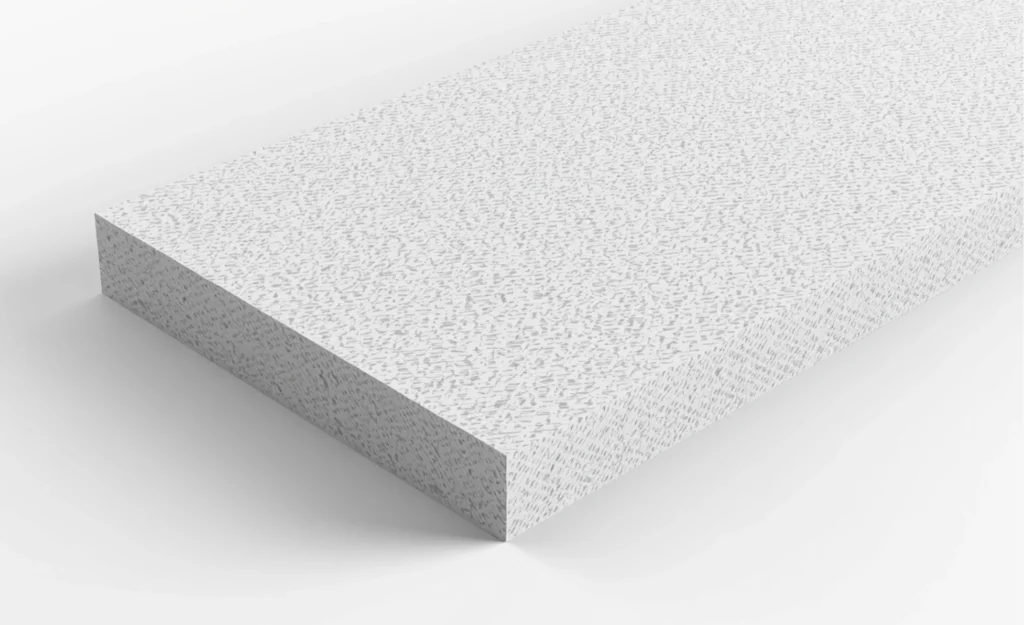
EPS or XPS – Which Is Better for Underfloor Heating?
Choosing the right insulation is one of the most important aspects of an underfloor heating system. Insulation helps reduce heat loss and improves the overall energy efficiency of the installation. Many homeowners and contractors wonder whether EPS or XPS boards are the better choice for underfloor heating. Both materials offer benefits, but they differ in their technical properties and recommended applications.
In this article, we compare EPS and XPS insulation boards for underfloor heating to help you choose the right solution for your project.
What Are EPS Boards?
EPS (Expanded Polystyrene) is a lightweight insulation material commonly known as polystyrene foam. It is widely used in residential and commercial construction.
EPS boards designed for underfloor heating offer several advantages:
- Good thermal insulation properties
- Low weight
- Easy handling and installation
- Competitive price
- Wide availability
Underfloor heating systems typically use EPS boards with a suitable compressive strength to withstand the loads imposed by the floor construction and its intended use.
What Are XPS Boards?
XPS (Extruded Polystyrene) is a rigid thermal insulation material with a predominantly closed-cell structure. Compared with standard EPS, XPS generally offers lower water absorption and high compressive strength, depending on the specific product grade.
The main advantages of XPS boards include:
- Low water absorption
- High compressive strength in suitable grades
- Good dimensional stability
- Resistance to mechanical loads
These properties make XPS a suitable insulation material for applications where moisture resistance and compressive strength are particularly important, such as certain floors at ground level, basement structures and areas exposed to higher loads.
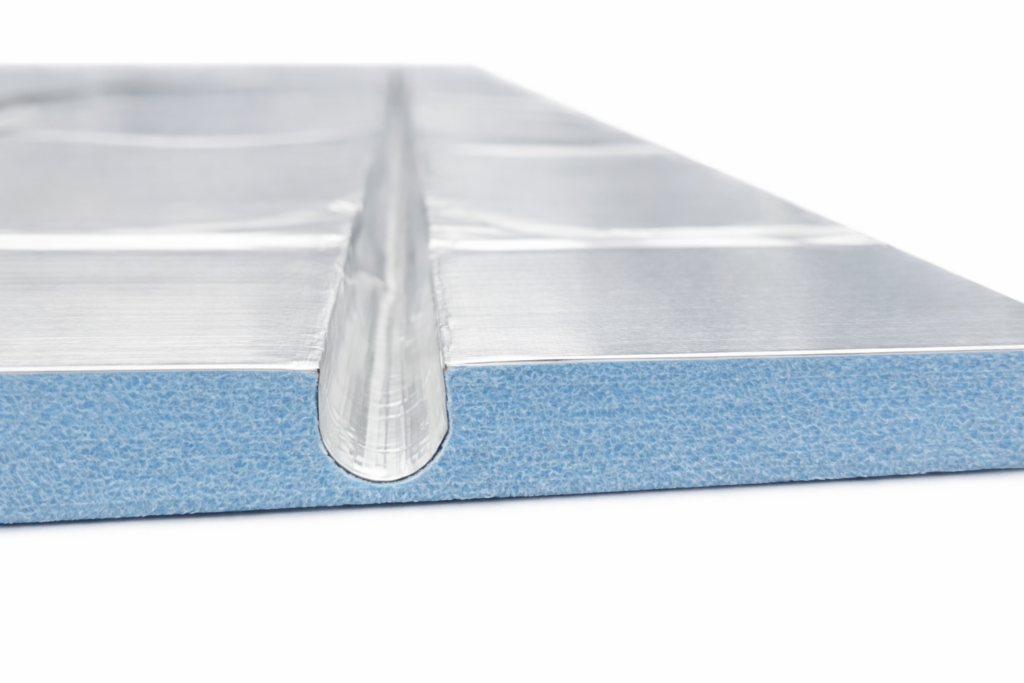
EPS vs XPS – Comparing the Key Properties
Thermal Insulation
Both EPS and XPS provide effective thermal insulation. Their thermal conductivity depends on the specific product, so the declared λD value should be checked when comparing different boards.
EPS can provide adequate thermal insulation for most residential underfloor heating installations, when the correct product grade and thickness are selected in accordance with the building design.
Moisture Resistance
XPS generally has an advantage in applications where low water absorption is important.
Its closed-cell structure helps limit water absorption, making it suitable for certain floor constructions exposed to moisture. Potential applications include:
- Garages
- Basements
- Utility rooms
- Technical rooms
However, the suitability of either material depends on the complete floor construction, including any required damp-proofing and waterproofing layers.
Technical Specifications of BEFIRO XPS Boards
| Property | Specification |
| Dimensions | 1250 x 600 mm |
| Area per board | 0,75m² |
| Thickness | 20 mm, 25 mm, 30 mm |
| Pipe groove spacing | 10cm or 15cm |
| Compatible pipes | 16mm diameter |
| Material | Extruded polystyrene (XPS250, XPS300) |
| Compressive strength CS(10) | ≥ 250 kPa or ≥ 300 kPa |
| Declared thermal conductivity λD | 0,033 W/m·K |
| Thermal resistance Rd | 0,9 m²·K/W |
| Reaction to fire | Class E |
| Edge connection | Straight edge or interlocking milled edge |
| Versions | With or without an aluminum foil layer |
Mechanical Strength
XPS boards are available in grades offering high compressive strength, although the actual performance depends on the specific product. Some EPS grades also provide high compressive strength and are suitable for demanding floor applications.
If a floor is expected to support:
- Heavy equipment
- Vehicle traffic
- High concentrated loads
select insulation based on the design loads and the declared compressive properties of the specific board. The complete floor construction must also be suitable for the intended application.
For typical residential floors, appropriately specified EPS boards are often sufficient.
Price
Cost is an important consideration in most construction projects.
EPS boards are generally less expensive than comparable XPS boards. Across larger floor areas, this difference can have a significant impact on the overall project budget.
Where the design does not require the particular moisture-resistance or compressive-strength properties offered by a selected XPS product, EPS may be a more economical solution.
When Should You Choose XPS Boards?
XPS boards are worth considering when:
- The insulation is installed below ground level.
- The floor construction may be exposed to moisture.
- The application requires high compressive strength.
- The project involves a garage or certain industrial buildings.
The higher material cost may be justified when the specific performance characteristics of XPS are required by the project design.
Which Is Better for Underfloor Heating – EPS or XPS?
There is no single best solution for every project. In many residential buildings, underfloor heating works effectively with EPS boards that meet the project’s thermal insulation and compressive-strength requirements. EPS is widely available and often offers a lower initial material cost.
XPS can be a suitable alternative where low water absorption, high compressive strength or other specific material properties are important.
Before choosing insulation, consider more than just the material type. The required thickness, declared thermal conductivity, compressive strength, moisture conditions and overall floor construction all affect the suitability of the product.
Selecting insulation to match the building design helps create an efficient and durable underfloor heating system.
Frequently Asked Questions
Is EPS suitable for underfloor heating?
Yes. EPS boards are widely used in residential underfloor heating systems. The selected board must have suitable thermal properties and compressive strength for the intended floor construction.
Is XPS better than EPS?
Not in every situation. XPS generally offers lower water absorption, and certain XPS grades provide high compressive strength. EPS may be more economical where its declared properties meet the project requirements.
What thickness of insulation is suitable for underfloor heating?
The required thickness depends on the building design, floor construction, insulation requirements and whether the floor is above ground, on the ground or above an unheated space. Insulation layers can range from a few centimetres to considerably more. Follow the project specifications and applicable building requirements when selecting the thickness.